


A photo story by Andrea Calvetti interviewed by Rossella E. Frigerio
A chance encounter in one of the most remote corners of the world holds up a mirror to our disconnected lives and invites us to return to wholeness.
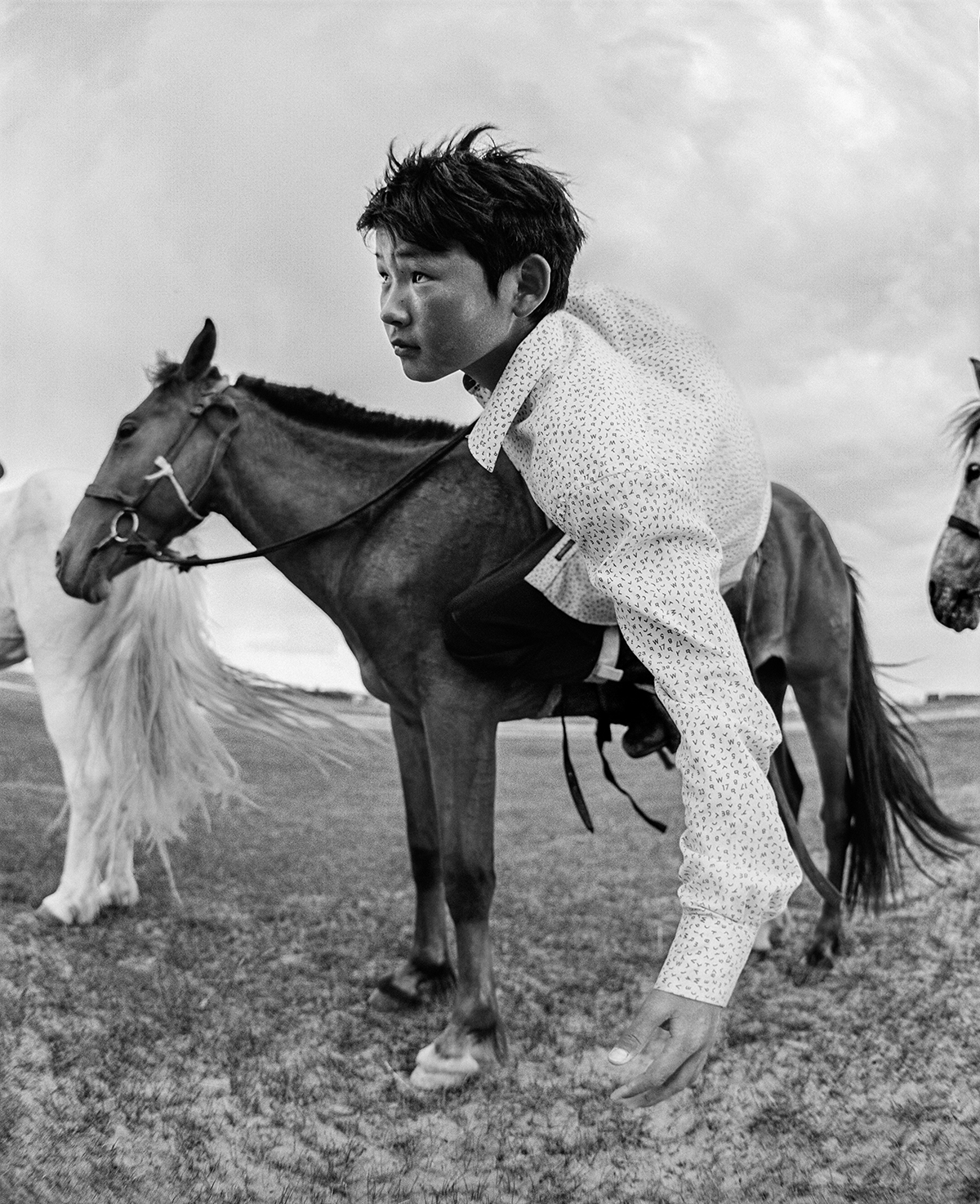
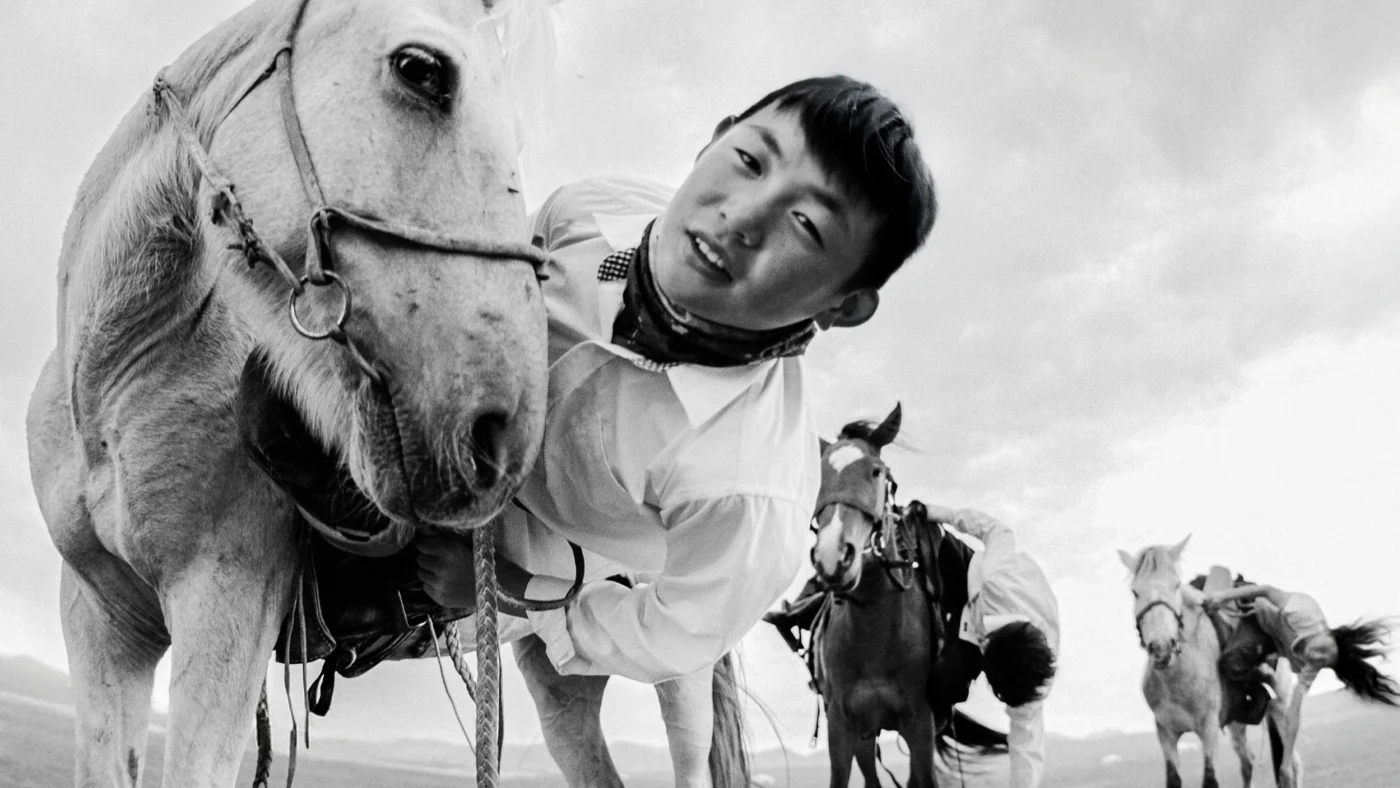
It was time for lunch in the Mongolian steppe. Director Andrea Calvetti, whose eye has shaped global fashion campaigns with his signature 70s-inspired optimism, pulled over and sat down at a roadside kiosk. Before long, the empty stillness was broken by the sound of galloping horse hooves. A group of young boys circled close – drawn, he suspects, by his unmissable shock of curly hair – and began to (quite literally) horse around in a bid to attract his attention. “Perhaps they thought I was some kind of rock star,” he laughs. Intrigued, he reached for his camera.
The photographs that emerged are quietly disarming. Shot in black and white with a fish-eye lens – a deliberate choice to honour what Calvetti describes as “the human pathos” of the moment – they capture the riders in their element, crystallising an unguarded moment of natural closeness.
Calvetti was travelling on assignment across Mongolia’s sparsely-populated land for the first time, however these images belong outside any brief.
“In Mongolia was the complete absence of the Meta world.”
They were seized in the space between takes – in the way that the most honest photographs so often are. In a world where social life is increasingly found behind the tip-tap of a mobile screen, here were children whose social world was the steppe itself – the horses, the sky, themselves. It was a chance encounter that brought Calvetti to discover something universal and, at the same time, increasingly rare: a generation that is still entirely present – within nature and within themselves.
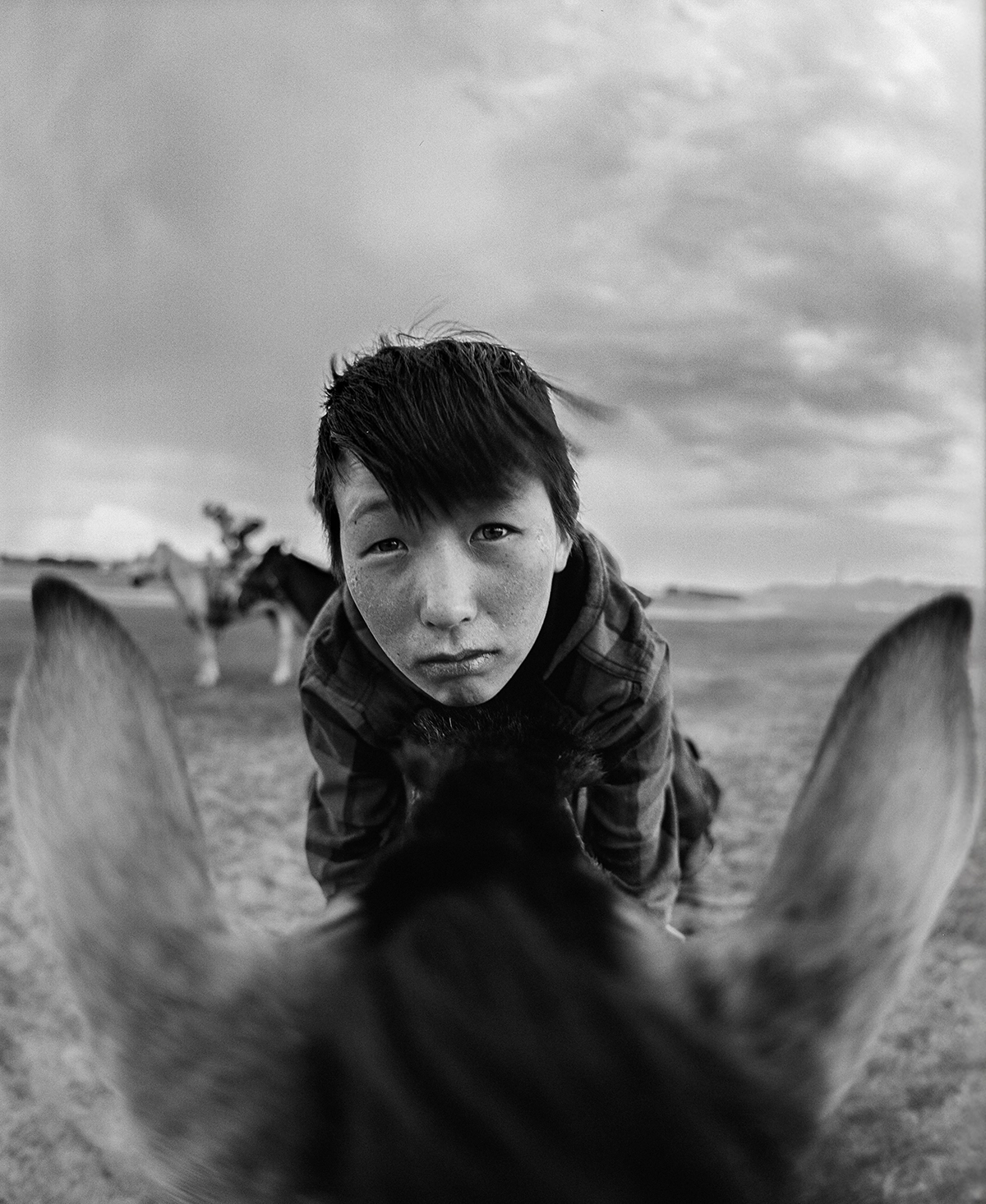
What did you find in these Mongolian youngsters that resonated – and what surprised you the most?
What unites young people around the world, regardless of where they come from, is a sense of exploration – but what struck me most in Mongolia was the complete absence of the meta world. Today, more and more kids are absorbed by their phones, losing touch with real-world interaction – but not these young Mongolians. They move freely, riding their horses across the steppe, fully present in their world. I was also in awe of how young these riders were – and how unafraid. Handling such powerful animals as though it were the most natural thing in the world. Because for them, it is.
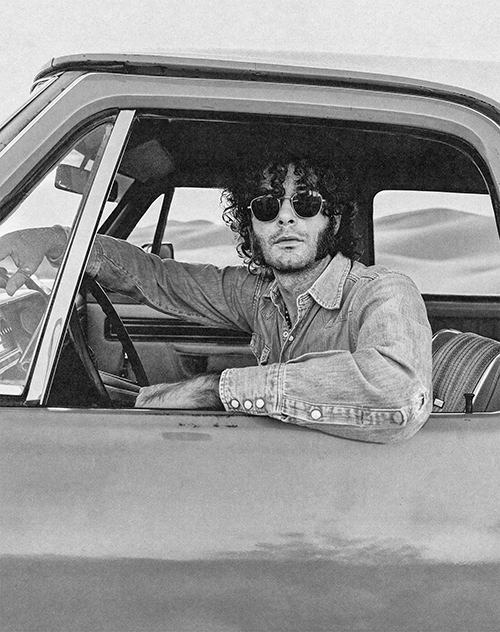
“Being a foreigner rewrites the rules. You discover parts of your personality you didn’t know exist.”
You’ve spoken about how being physically remote rewrites the rules of connection. What do you mean by that?
To me, remoteness is not just a physical experience – it happens the moment you step outside of your own culture. Being a foreigner rewrites the rules. When no one knows who you are, there’s nothing to protect: no expectations, no roles, no past. You move lighter. You speak first. You take chances you wouldn’t take at home. In a place that doesn’t recognize you, you’re free to become someone else: or simply more yourself. You discover parts of your personality you didn’t know existed. Suddenly, approaching a stranger feels natural, because you’re no longer defined by the world you come from.
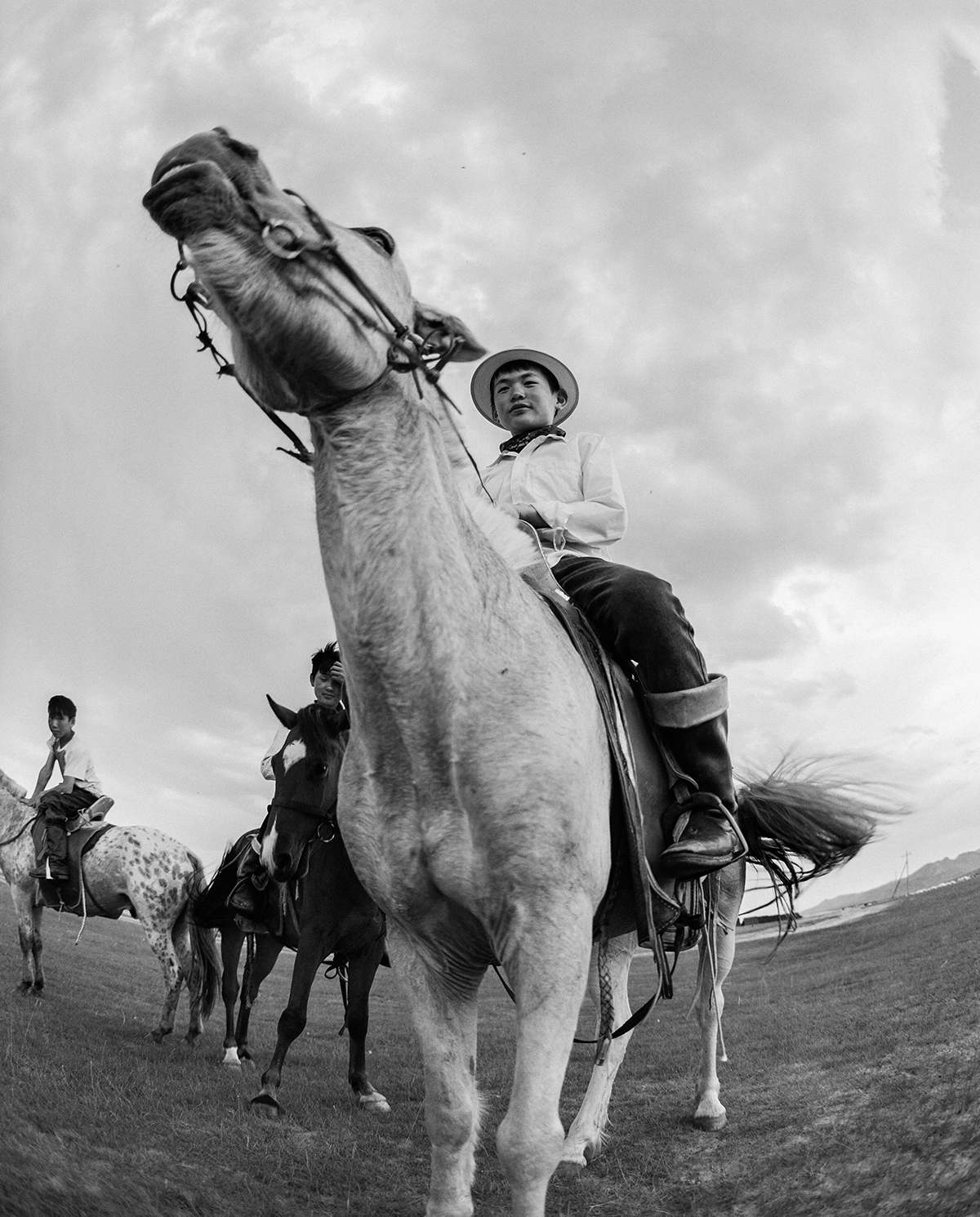
What is the biggest thing that you personally took from this trip – a perception shift? A lesson? A change in how you create?
Thinking back to the nomads that I crossed paths with, what stayed with me most was their simplicity and deep connection to nature. They live as a part of the ecosystem, rather than dominating it, as we often do in the West. When I returned from Mongolia, I carried that perspective with me. I realized that less is more. While I still appreciate surrounding myself with objects from the past, I’ve become much more conscious about what I spend money on. Mongolia reminded me how meaningful it is simply to go out and experience the world.
“Everyone is on the same level.”
Three words recur throughout our conversation when Calvetti speaks of the Mongolian people and their land: pure, loving, real. “Everyone is on the same level,” he says – a phrase that speaks as much to the deep egalitarianism of their nomadic communities as it does to the absence of hierarchy that he felt in every encounter. His images, then, become more than a simple act of spontaneous documentation. What Calvetti has captured is the wildness of the human experience and, more interestingly, its wholeness. A simple yet profound way of moving through the world that we have largely forgotten – and one we must begin to remember once again.
Credits: @straydogfilm @onebluedot_