




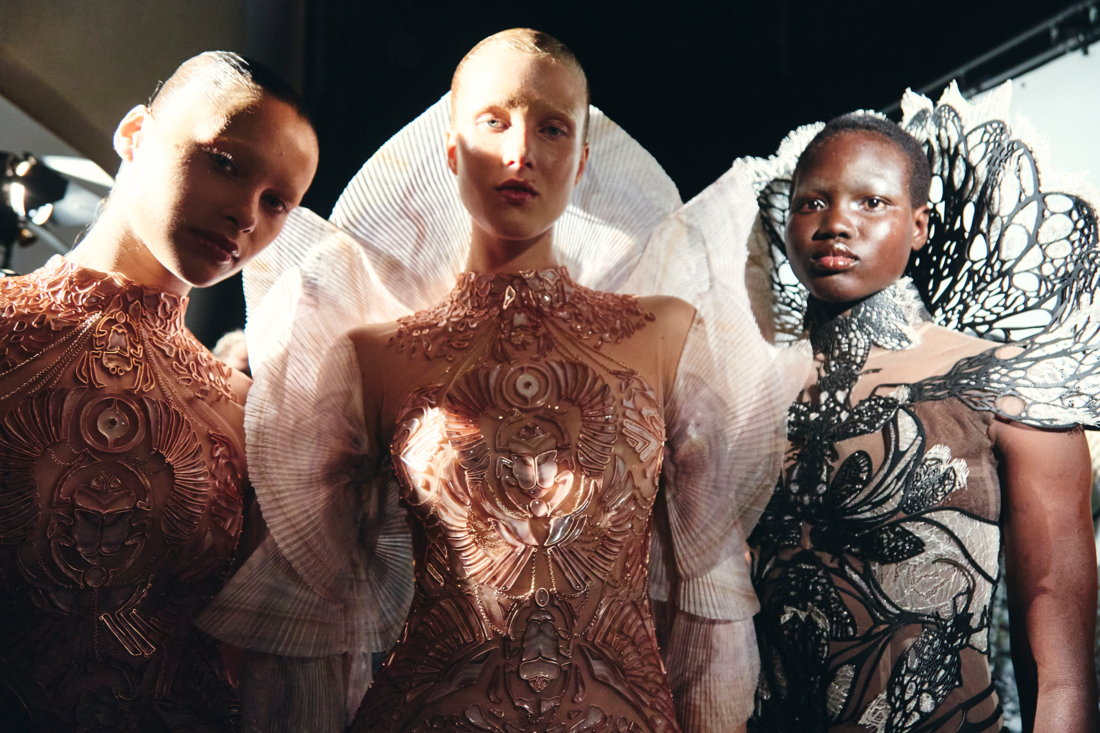
Considered one of fashion’s most innovative voices, Iris van Herpen has long explored the fusion of science, technology, and art.
With Sympoiesis, presented during Paris Haute Couture, she collaborates with architects, biologists, and digital artists to craft pieces that feel alive—structures inspired by coral reefs, mycelium, and the networks of life itself.
Sympoiesis isn’t just fashion—it’s a manifesto. The collection imagines a future where clothing is not static but symbiotic, evolving with its environment.
It challenges us to rethink couture as a living interface between humans and nature, moving beyond borders of body and design.
Curated by Land to Land

Iris van Herpen’s ‘Sympoiesis’ Turns Haute Couture Into Living Matter.
Words: Lara Bazzoui | Source: Mojeh
It’s Paris Couture Week. Picture the rain – steady and unforgiving – but, with umbrellas moving in synchronised strides between venues, it all starts to feel oddly orchestral. Fashion editors and insiders are stepping out of black cars, heels slipping on the cobblestones, dressed in Iris van Herpen creations that look half-fossil, half-futuristic jellyfish. They’re making their way into what they think will be another beautiful show. What they’re about to witness, though, is something else entirely – a collection so transporting, they might as well be glued to their seats.
The lights drop. There’s no traditional opening. Instead, a dancer appears suspended in moving beams, her form flickering in and out like a creature from the deep sea. It’s a collaboration between van Herpen and Dutch artist Nick Verstand, but more than that, it’s a signal: this show isn’t about fashion in the traditional sense. It’s about systems – movement, biology, survival.
“For nearly twenty years,
van Herpen has stood apart,
not because of shock tactics or trend-chasing,
but through her dedication to science, movement, and the sublime“
Inspired by the ocean as both a life force and an ecosystem on the edge, looks in Sympoiesis rippled with translucent layers that evoked the fragile membranes of jellyfish, coral polyps, and ocean foam. These garments blurred the line between fabric and fluid, engineered to ripple and move like water itself. Some pieces seemed to breathe with an organic pulse, responding to the body’s slightest motion, with harsh angles or rigid forms nowhere to be seen. Instead, every silhouette curved, waved, and floated, appearing less worn and more inhabited, as if alive.


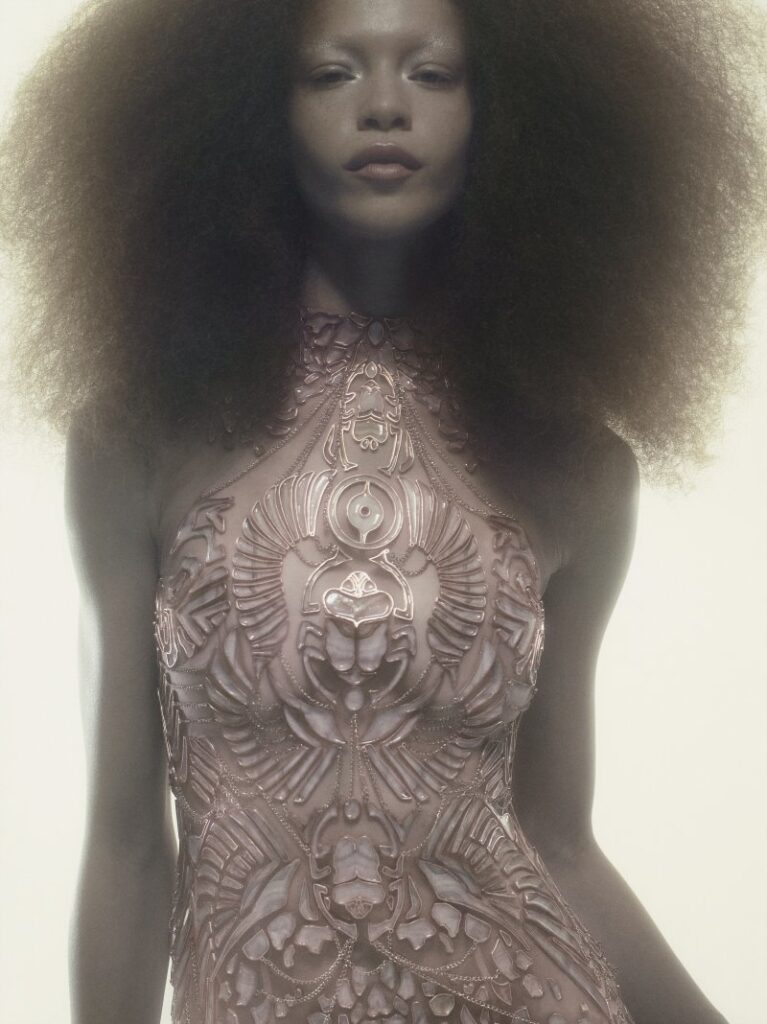
This ethereal effect was deepened by van Herpen’s inspiration of pioneering dancer Loie Fuller, whose groundbreaking experiments with fabric and movement inform the collection’s constant state of flux. Through this, the clothes never felt static but forever in motion, shifting and shimmering like ocean currents, embodying the fragile and dynamic relationship between humanity and the natural world.
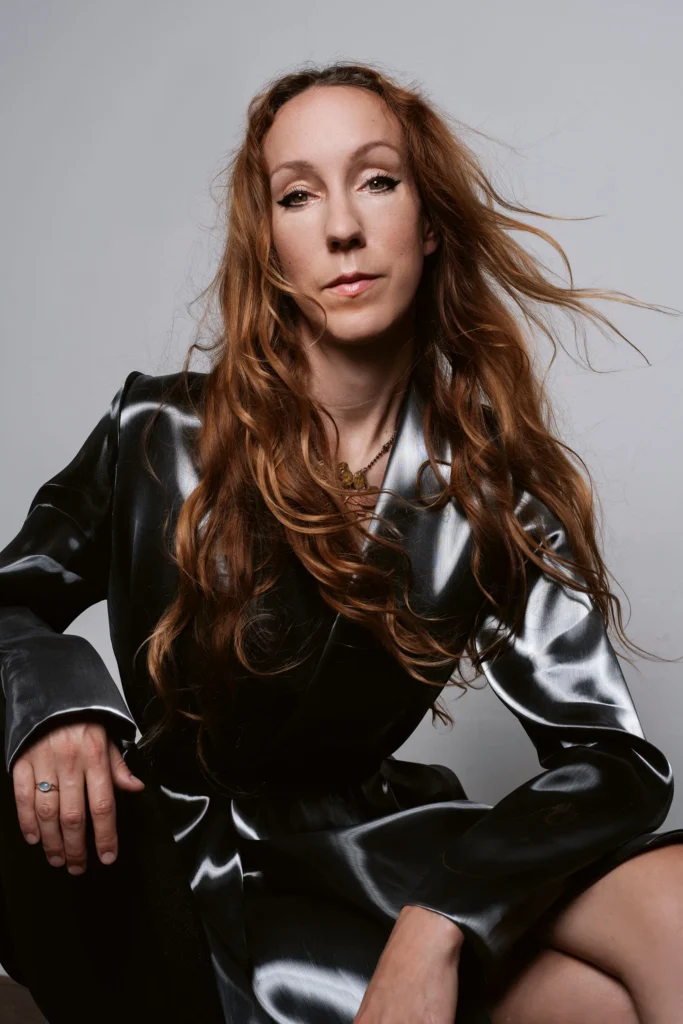
“Working with bio-engineer, we moved from simply being inspired by nature to truly collaborating with it.“
In a season where heritage Houses leaned heavily on archives and familiar codes, van Herpen’s offering felt almost alien in comparison, and intentionally so. She wasn’t looking backward, she was designing with the urgency of now. The climate crisis isn’t a mood board. And in Sympoiesis, the very act of creation became a form of environmental reflection. What if couture, instead of simply showcasing excess, demanded care? What if fashion could be grown, nurtured, symbiotic?