


We live in an age of shifting lines — between nations, disciplines, and identities. “Beyond Borders” is more than a theme but a way of seeing: tracing how creativity, work, and belonging expand beyond fixed definitions.
“The First Issue of TheLandmark explores
new nomadic economies,
hybrid cultures,
and the dialogue between
fashion and technology. “
Exploring the places where boundaries dissolve between nations, cultures, and disciplines.
From fashion that reinterprets craftmaship through technology, to artists who merge identities into new forms of expression, to economies shaped by nomads and networks instead of borders, this first issue of TheLandmark traces how creativity and resilience thrive in transition.
Nicolò Bottarelli / Editor-in-Chief — Land to Land

Running Fence – 1972/1976
Source: Christo & Jeanne Claude Website
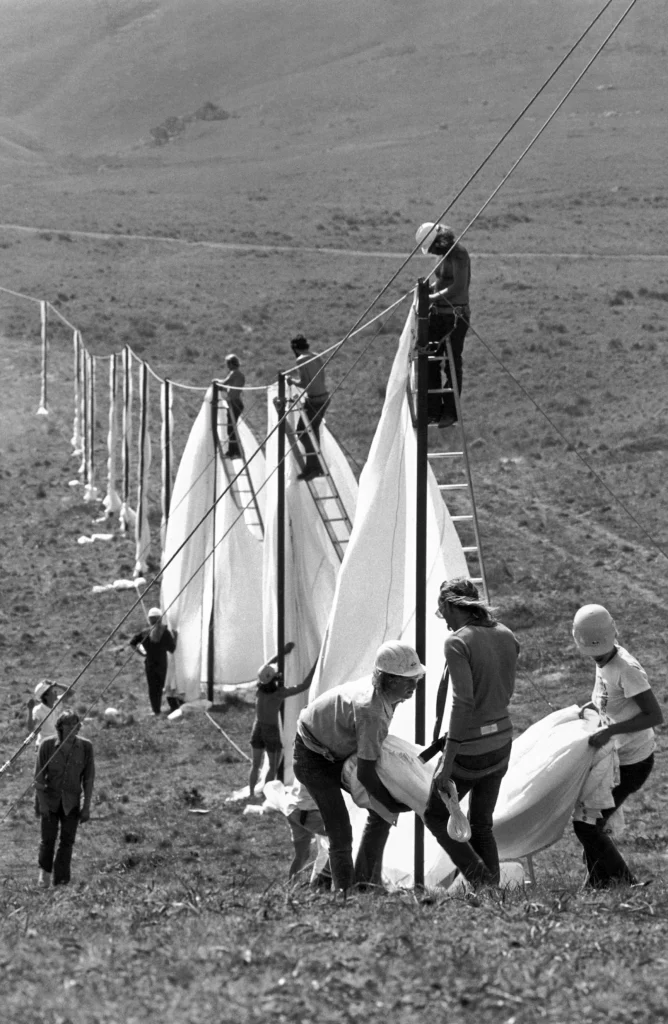
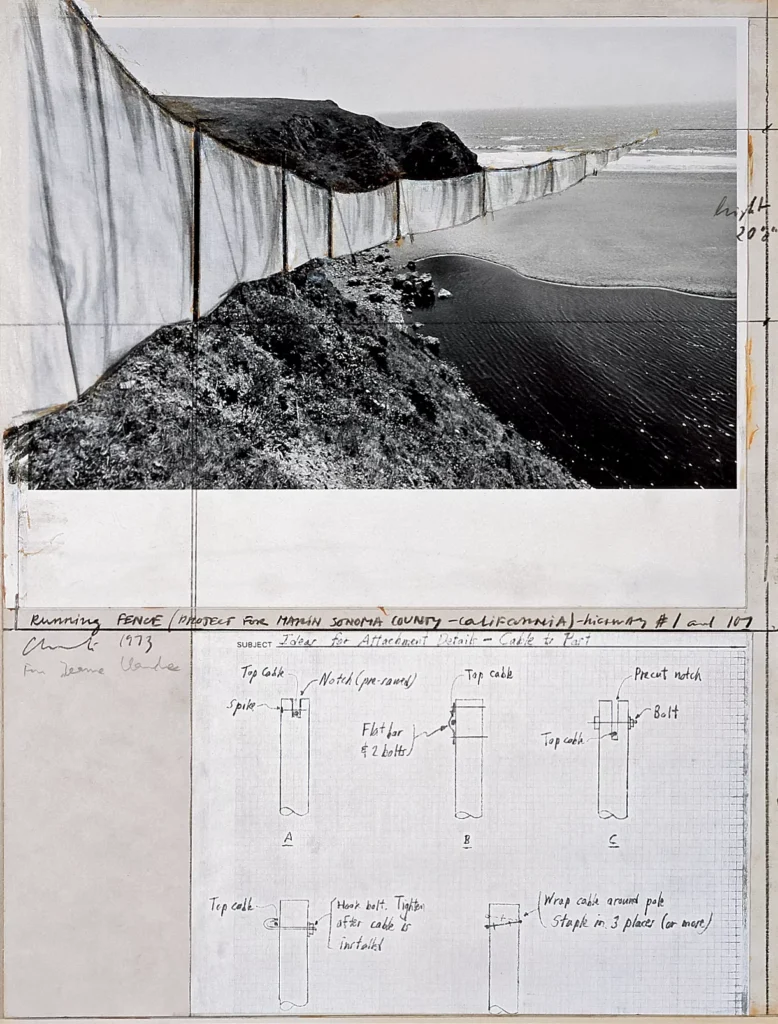
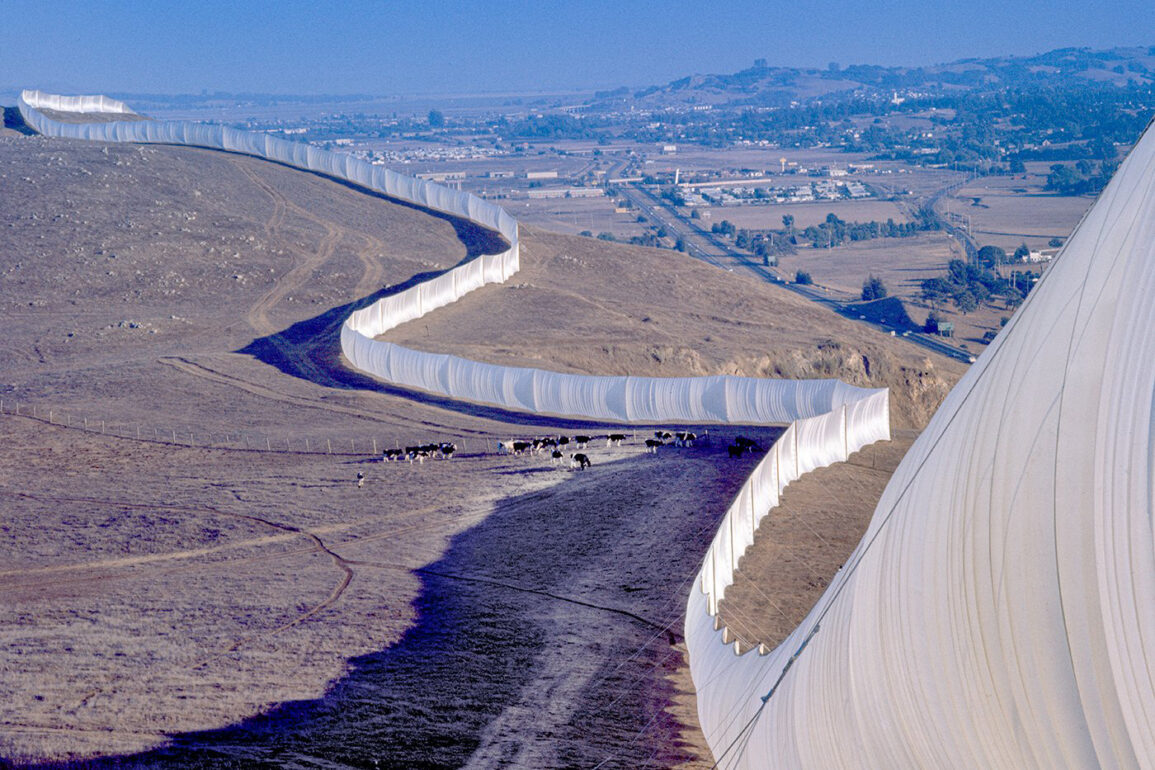
The Running Fence was completed on September 10, 1976. 5.5 meters (18 feet) high, 39.4 kilometers (24.5 miles) long, extending east-west near Freeway 101, north of San Francisco, on the private properties of 59 ranchers, following the rolling hills and dropping down to the Pacific Ocean at Bodega Bay. The art project consisted of 42 months of collaborative efforts, the ranchers’ participation, eighteen public hearings, three sessions at the Superior Courts of California, the drafting of a 450-page Environmental Impact Report and the temporary use of the hills, the sky and the ocean.
“The art project consisted
of 42 months of collaborative efforts.”

All expenses for the temporary work of art were paid by Christo and Jeanne-Claude through the sale of studies, preparatory drawings and collages, scale models and original lithographs. The artists did not accept sponsorship of any kind.
All parts of Running Fence’s structure were designed for complete removal and no visible evidence of Running Fence remains on the hills of Sonoma and Marin Counties.
Running Fence was made of 200,000 square meters (2.15 million square feet) of heavy woven white nylon fabric, hung from a steel cable strung between 2,050 steel poles (each 6.4 meters/21 feet long, 8.9 centimeters/3.5 inches in diameter) embedded 91 centimeters (3 feet) into the ground, using no concrete and braced laterally with guy wires (145 kilometers/90 miles of steel cable) and 14,000 earth anchors. The top and bottom edges of the 2,050 fabric panels were secured to the upper and lower cables by 350,000 hooks.

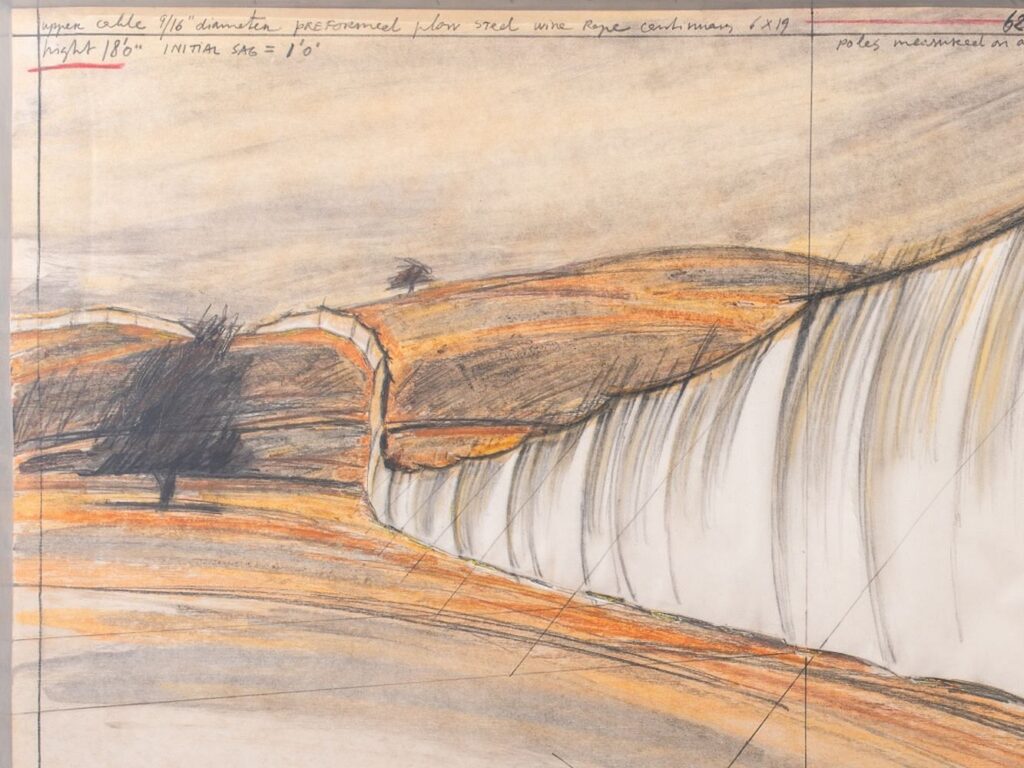
As it had been agreed with the ranchers and with county, state and federal agencies, the removal of Running Fence started 14 days after its completion and all materials were given to the ranchers.
Running Fence crossed fourteen roads and the town of Valley Ford, leaving passage for cars, cattle and wildlife. It was designed to be viewed by following 64 kilometers (40 miles) of public roads, in Sonoma and Marin Counties.