




Fashion thrives on image, but its most revealing moments often happen off-camera. In “Fashion Neurosis”, Bella Freud invites designers, artists, and writers into conversations that drift away from trends and toward inner life.
The podcast uncovers the emotional rituals behind creativity – the anxieties, memories, and vulnerabilities that shape how people make work. By slowing the pace and listening closely, these exchanges open a quieter dimension of an industry built on visibility, offering insight into the human processes beneath the polished surface.
Curated by Land to Land
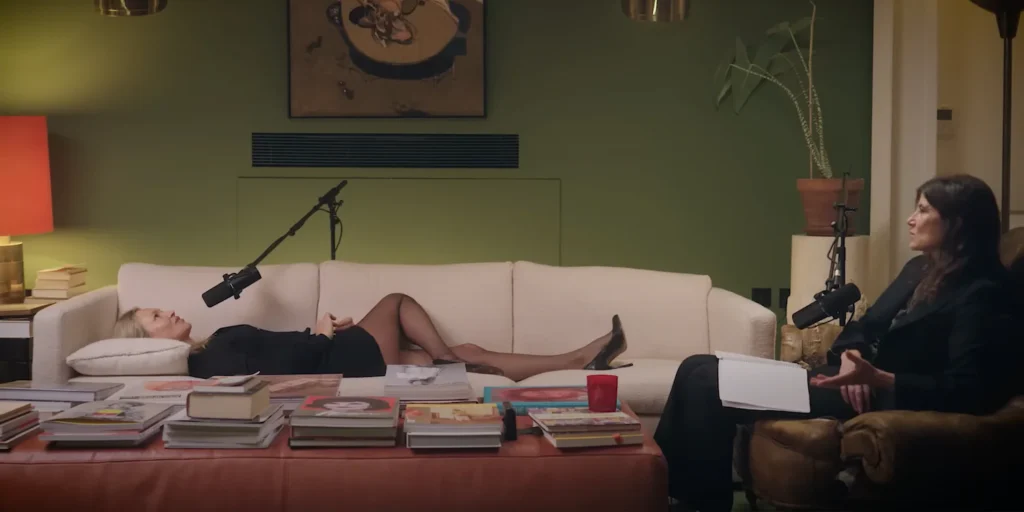
Bella Freud on the meaning of clothes
Words: Bella Freud| Source: Financial Times
The first piece of clothing I became obsessed with was a pink gingham shirt. It belonged to a girl I was on a summer camp with. The camp was a very spartan affair, a dorm with iron bunk beds and grey blankets, but we entertained ourselves by miming to Gary Glitter songs on a high windowsill in the canteen. We were both around eight years old and the shirt represented the glamour of normality.
I noticed how composed I felt when I wore it. I never forgot about how it made me feel different. It eclipsed memories of any birthday or other supposed significant events from my childhood. This was the pivotal memory and the genesis for my podcast Fashion Neurosis. I have always been hyper-aware of the power of being able to transform through clothes and I had a hunch that people were much more interested in them than they realised. On the podcast, I use clothes as a prism through which to refract questions about how people feel about themselves. In my conversations the thing that stands out for me — whomever I am speaking with — is their drive; the drive to go beyond the mirror in whatever arena they work in and the pursuit of an idea regardless of whether it will work or not.

I started to become aware of the way that others dressed and how people responded to it when I was around the age of 11, growing up in the ’70s. I went to a Steiner school and even though there was no school uniform, very few people came to school looking cool. Long frumpy skirts in brown corduroy and Birkenstocks were worn by the teachers. Most pupils dressed in a nondescript way, apart from two standout girls. One was called Jane and she was incredibly beautiful: lithe, with fair, downy skin like the wings of some expensive moth. Her eyes were blue, reflecting her demeanour of tentative rebelliousness. She had a thick mane of fawn-coloured feathered hair with a fringe that hung into her eyes. I remember seeing her in the school grounds, aged about 15, with a group of classmates. She was wearing a fitted long-sleeved T-shirt and tight trousers that showed her VPL. I felt embarrassed by her lack of modesty until another girl said, “Now, that’s what I call a good figure.” I was astonished, then I realised she was right. All this visibility was so unselfconscious and alluring.
“Clothes could be a way out of the trap of negative thinking about myself”.
In our household of five girls there was no celebration or excitement about our emerging bodies. Our puberties and everything that went with them were somehow unmentionable. There were jokes made about breasts — other people’s breasts. Breasts were gross yet they were also to be desired. In our home to wear trousers tight enough to show the line of our panties was so out of the question as to be heinous. And here was Jane flaunting herself in all her haunting teenage beauty . . . A lightbulb went off somewhere in me and I registered this was freedom. The other girl was called Rusty and she came from a Chiswick estate in London. She was different from all of us. We seemed like unformed children compared with her. She had an air of knowing, as well as innocence; she also dressed differently, in a more fashionable way.

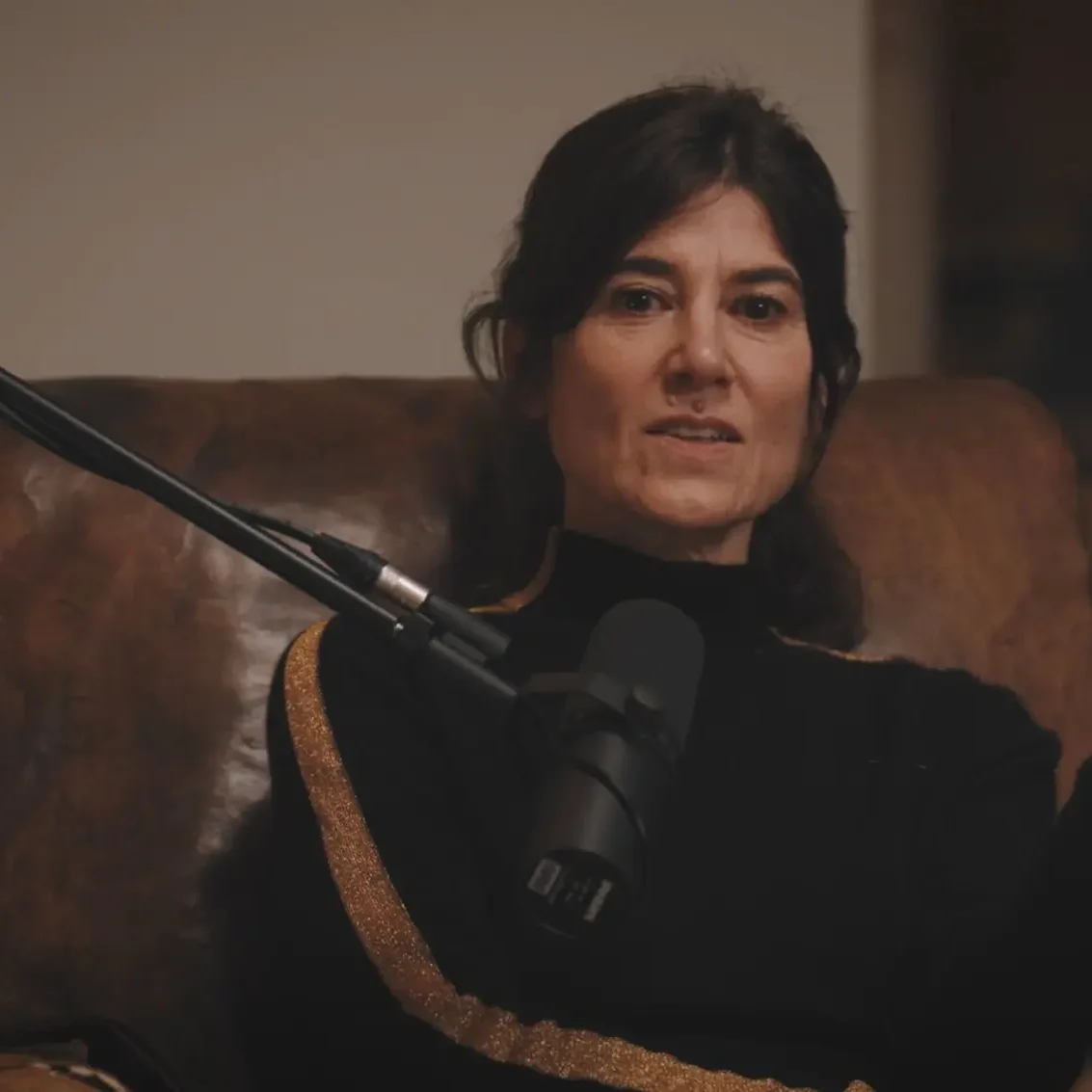
Fashion was a dirty word at my school. There was a philosophy around the Steiner schools called Anthroposophy. Anthroposophy is an educational, therapeutic and creative system established by Rudolf Steiner, seeking to use mainly natural means to optimise physical and mental health and wellbeing. Some of it was quite interesting: they farmed biodynamically, following phases of the moon. They believed in the ethical treatment of animals for farming, which appealed to me. But for some reason they were prejudiced against fashion and treated anyone interested in it as vain and shallow. The mere mention of the F word was met with disdain.
Hence my preoccupation with clothes was contaminated with a feeling of shame and I kept it hidden, even in the way I dressed. I preferred to adopt a boyish style, which suited me but also served as a foil within which to secretly explore my identity. Rusty had none of these hang-ups. Trendy clothes were not treated as a form of narcissistic self-indulgence. Rusty’s mother gave her Biba hand-me-downs; she even had a pair of platform shoes that were highly disapproved of by the Steiner community. She introduced me to David Bowie and Marc Bolan. It was a revelation.
I realised I had been living in a cult of dreariness! I started to discover that clothes could be a way out of the trap of negative thinking about myself. “Why were we so riddled with shame about our bodies?” It’s one of things I often discuss with my sister on our long chats on the phone. I had so many insecurities about my body and felt paralysed with self-criticism and mortification. If anyone in our household wore something that even sniffed at being sexy it was an unspoken faux-pas.
Once I went to a therapist, a woman, who after listening to me for a while, asked if I had lots of outfits in my wardrobe. “Not really,” I hesitated. “But why not?” she countered. “That is your resource — clothes. You are clearly good at this and it makes you feel better. So why deprive yourself of this source of confidence and comfort?” Therapists rarely talk about clothes and yet clothes are the most important markers and milestones of our early development. This therapist was fairly useless except for her one brilliant insight. I started to learn about the value of clothes and why they mattered. How the right outfit can spring you out of self-consciousness and self-loathing. Clothes help manage extreme shyness by suggesting things that it’s not possible to articulate: they are a parallel language.