


A Photographic Story by Andrea Mauro interviewed by Sara Schifano.
Beneath the elegant streets of Paris, far from the cafés and boulangeries that tourists flock to, lies an invisible city: a labyrinth of tunnels stretching over 200 kilometers, largely hidden from public view. These are the catacombs, built in the late 18th century to house the remains of millions of Parisians. Today, they form the realm of an elusive underground society – the cataphiles – explorers who traverse these passages with reverence, daring, and an almost obsessive knowledge of every corridor, waterway, and hidden chamber.

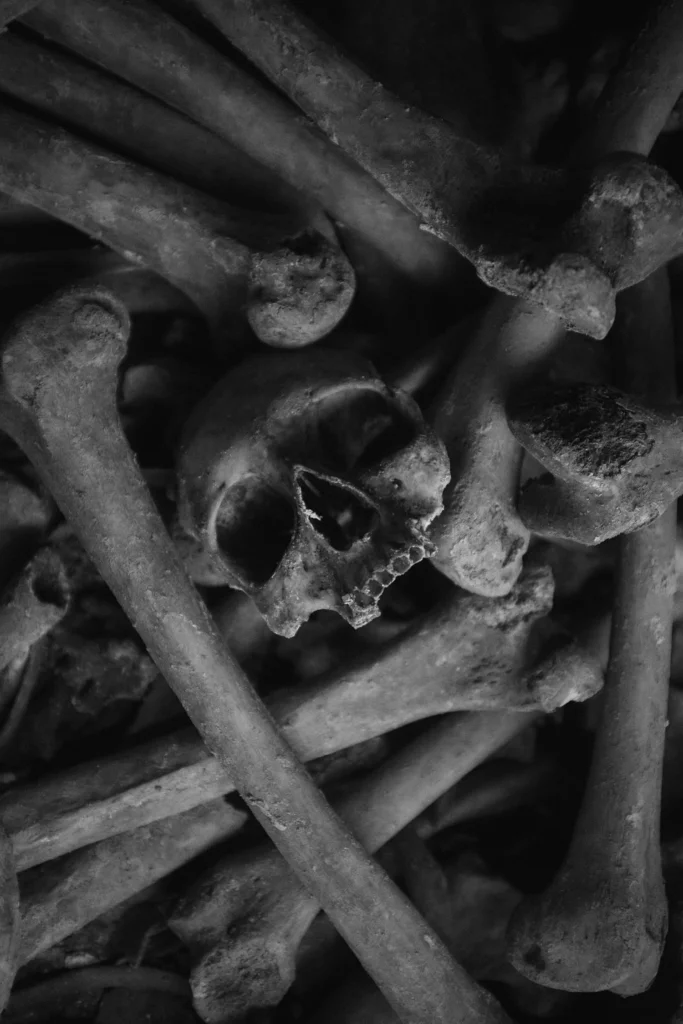
Italian photographer Andrea Mauro, whose work is largely dedicated to fashion, became fascinated by this long-enduring secret society. His desire to document them grew as he learned more about their world, though it took months to gain their trust and convince them to bring him on one of their underground ventures – a rare opportunity to witness and photograph a world few outsiders ever see. “The cataphiles aren’t thrill-seekers or people chasing excess,” Mauro explains. “To do what they do, you need physical endurance, focus, and respect. It’s a serious culture, passed down from father to son for generations. People live and breathe this world.” His photographs capture that intimacy: narrow, waterlogged tunnels, centuries-old ossuaries, and improvised rooms.

Entering this subterranean city is not for the faint of heart. Mauro recalls crawling through passages barely wider than his shoulders, the ground often slick with mud or knee-deep water. “In some places, you have to move like a spider, inching forward, sometimes over human bones from the 1800s. The darkness is absolute. The only light comes from a headlamp. It’s claustrophobic, disorienting – and thrilling all at once.” Each photograph is seized in fleeting seconds; entrances can never be revealed, as the cataphiles’ code forbids exposing access points, a precaution against closure by authorities.
“In some places, you have to move like a spider, inching forward, sometimes over human bones from the 1800s”.
Yet this underground is not only a test of physical endurance – it is profoundly alive. The cataphiles meticulously maintain and clean the tunnels. Mauro describes rooms where friends gather, light candles, eat sandwiches, and talk quietly. “It’s not about parties or spectacle,” he says. “It’s about exploration, respect, and a sense of peace. Down here, they reset themselves, almost like a form of meditation. You’re alone with the city, but not lonely. It’s completely removed from the chaos above.”
“To do what they do, you need physical endurance, focus, and respect. It’s a serious culture, passed down from father to son for generations.”
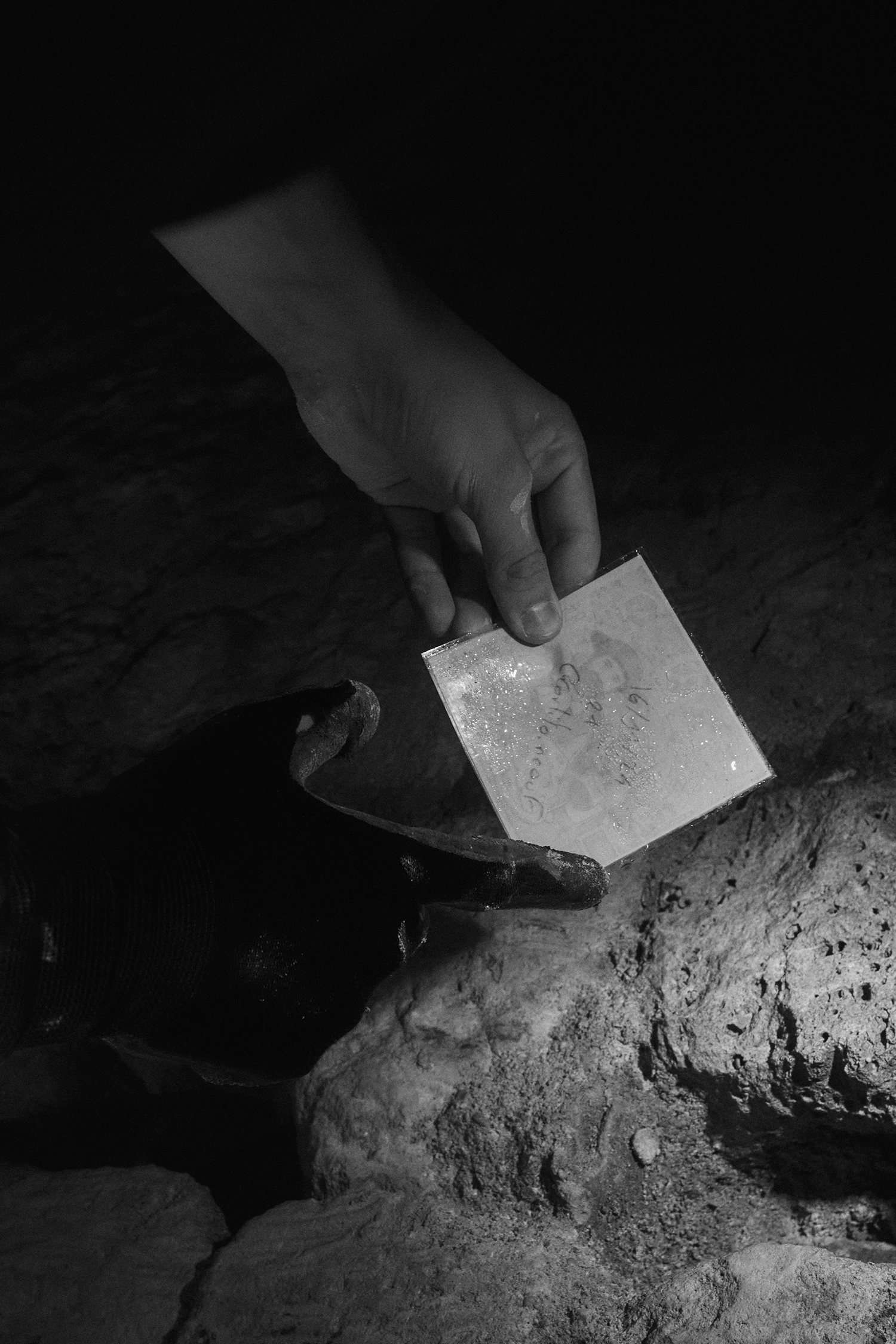
Communication in this hidden world often happens silently, through traces left behind. Some cataphiles write short notes and messages, concealing them in crevices or chambers for others to discover. Others collect these writings – fragments of thoughts, warnings, jokes, or simple greetings – forming an informal archive of underground life. These handwritten messages, never meant for the surface world, function as a quiet dialogue across time, reinforcing a sense of belonging within the labyrinth.
Mauro’s lens captures not only the human presence but the history embedded in these spaces. Ancient inscriptions mark the walls, some dating back to the 1800s, guiding explorers and preserving the memory of those who came before. Abandoned infrastructure — old banking machinery, water conduits, remnants of 19th-century construction — punctuates the tunnels, creating a landscape that feels both archaeological and alive. “It’s like discovering a city beneath a city,” Mauro explains. “Every corner, every corridor carries the weight of history.”
“Navigating the labyrinth requires more than courage; it demands trust.”
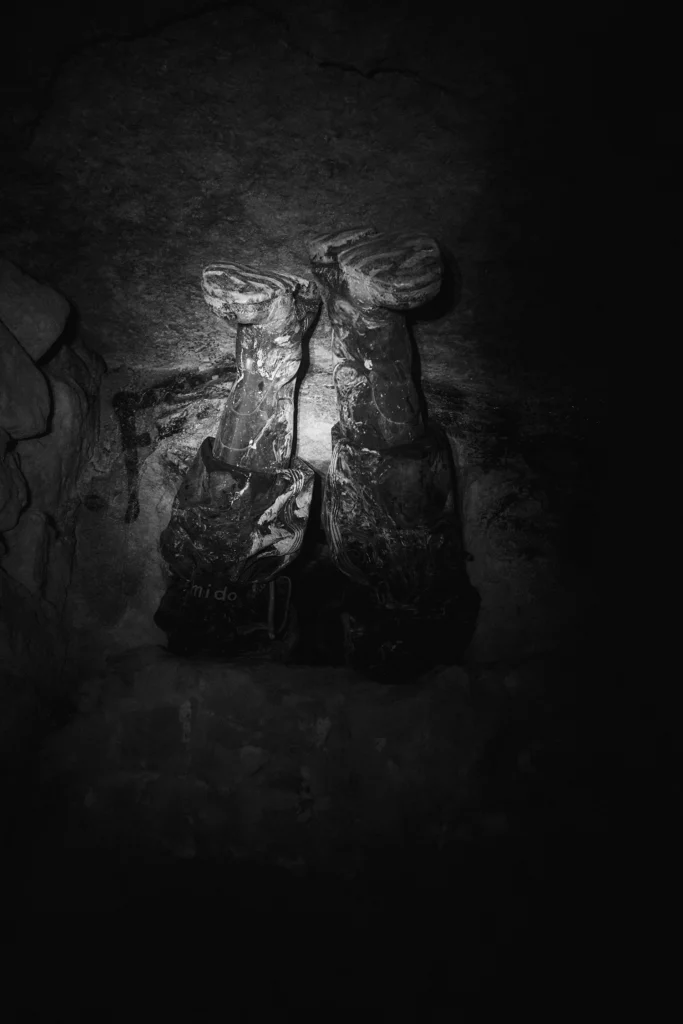
For Mauro, this project is about immersion, not spectacle. Even if he wanted to, flashy lighting or staged scenes were impossible; his camera simply records what he sees, illuminated by a headlamp and the dim glow of occasional candles. “I wanted to show the discovery, the hidden paths, the sense of exploration – the details,” he says. “Not the parties, not the rave scenes, not the social parts. Those aren’t the catacombs I wanted to capture.
”Navigating the labyrinth requires more than courage; it demands trust.” Mauro relied on hand-drawn maps and the guidance of experienced cataphiles, who know where water levels rise and which areas are monitored. “They leave you to find your own way, but only if you’re ready,” he says. “I was elated – you have to stay alert, respect the space, and move deliberately. One wrong step, one moment of hesitation, and you could get stuck, or worse.”
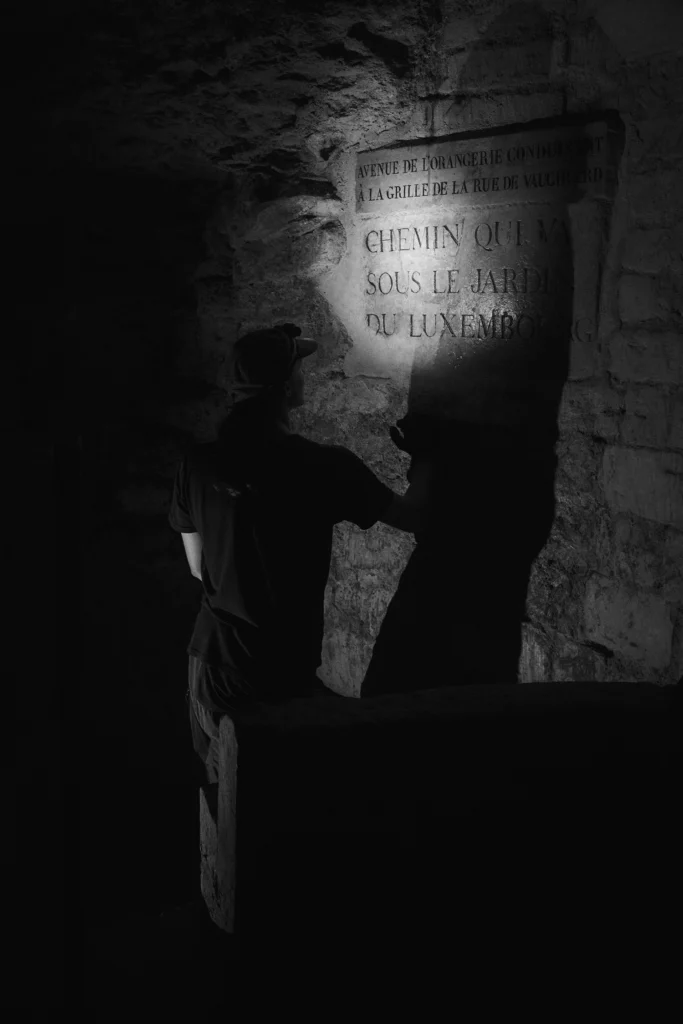
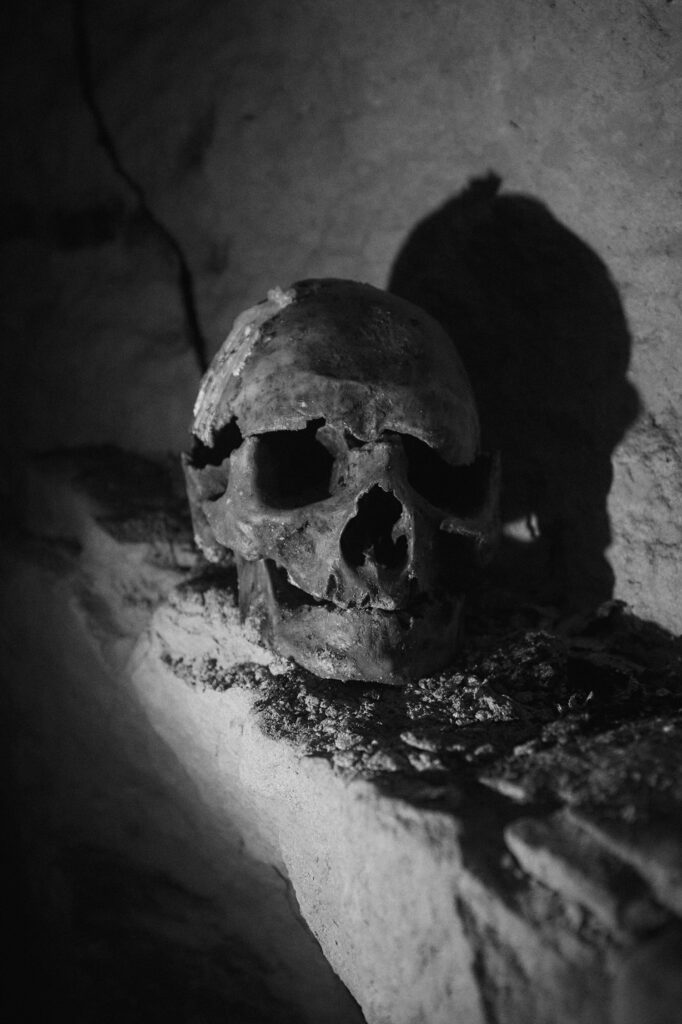
“Every corner, every corridor carries the weight of history.”
Ultimately, Mauro’s work reveals the catacombs as a space of paradox: dark yet luminous, dangerous yet peaceful, illegal yet governed by its own codes. His photographs invite viewers into a living, breathing underworld — a secret Paris that exists alongside the familiar city, hidden yet deeply intertwined with its history.
Through Mauro’s lens, the cataphiles emerge as guardians of a subterranean culture – a community devoted to preservation, exploration, and the unknown. His images remind us that even in one of the world’s most mapped cities, mysteries endure.
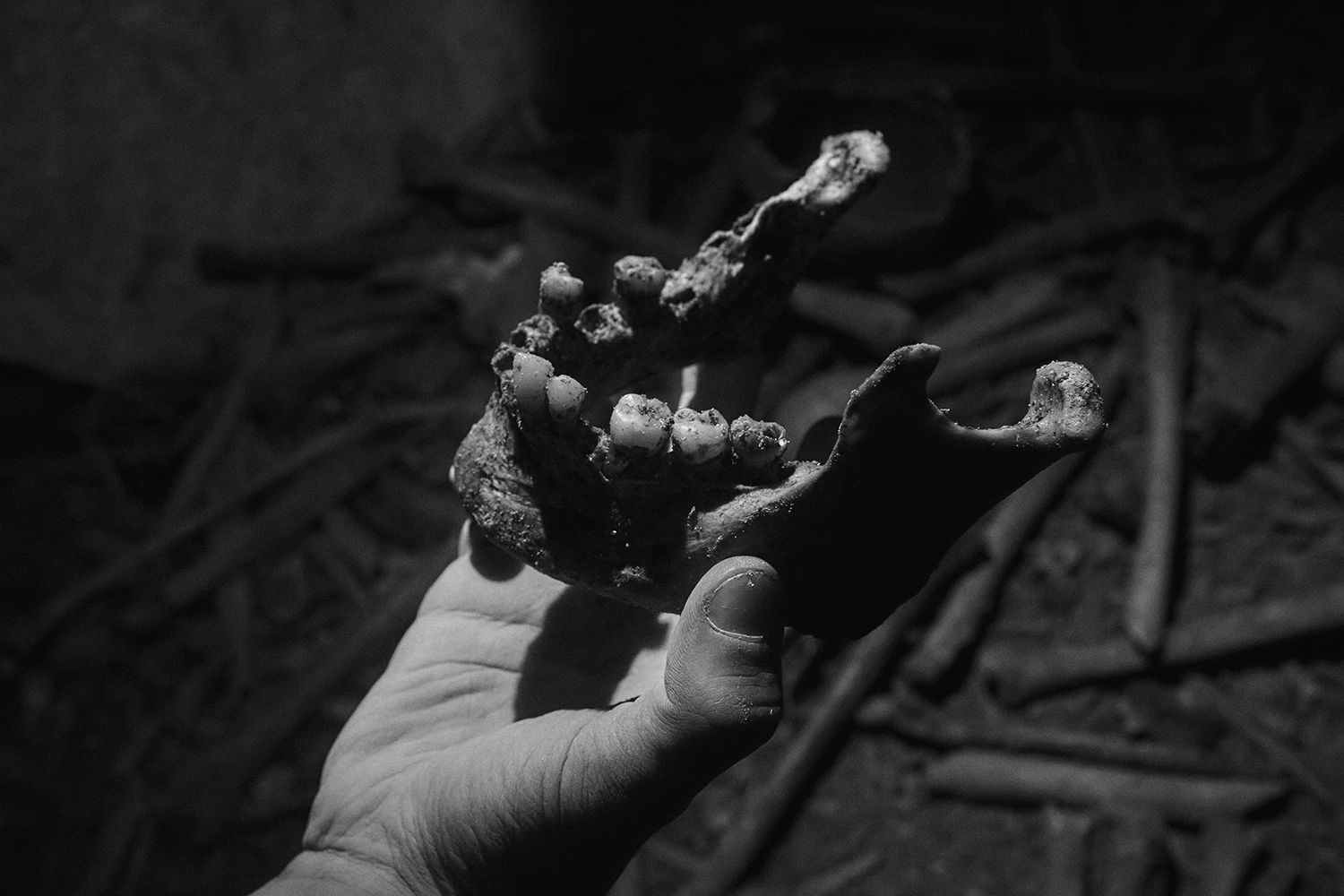
For Mauro, this project is only at the beginning. His desire is to return underground, to extend the work and document more details – the overlooked corners, the fleeting marks, the quiet rituals that continue to unfold beneath Paris. In the catacombs, he writes with light, capturing not just tunnels and ossuaries, but the pulse of a secret way of living – quiet yet alive below the surface.
Credits:
Photographer: Andrea Mauro.
An exclusive interview by Sara Schifano.